
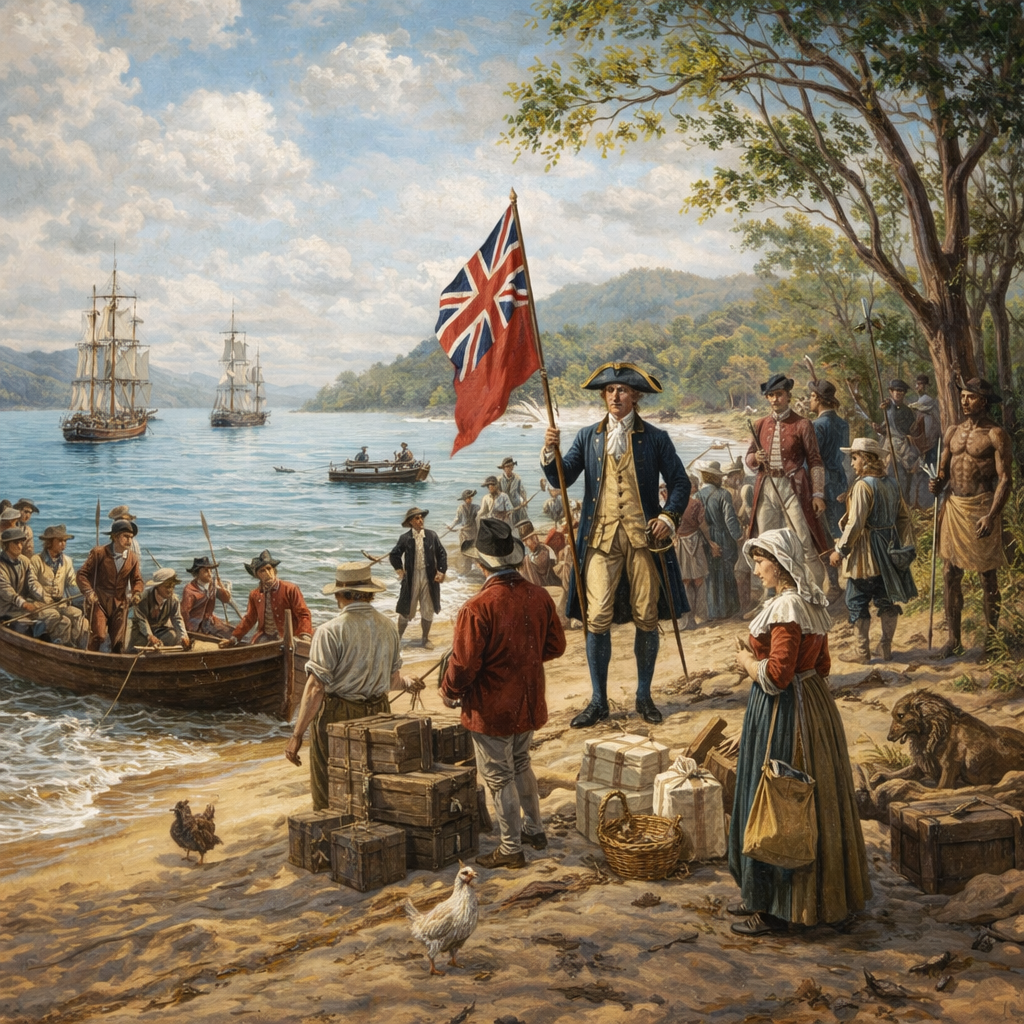
Australia as we know it today was shaped by more than two centuries of British colonisation. From the legal system to the language, political institutions and economic structure, modern Australia reflects its colonial origins.
But historians and anthropologists have long debated a fascinating question: what might Australia look like today if colonisation had never occurred?
While the answer is necessarily speculative, examining the continent’s Indigenous societies, geography and global history offers clues about how a different Australia might have evolved.
A Continent of Diverse Indigenous Nations
Before British settlement began in 1788, Australia was not an empty land. It was home to an estimated 750,000 to one million people, organised into hundreds of distinct nations with their own languages, laws and cultures.
Researchers believe there were more than 250 language groups and around 500–600 separate clan groups across the continent. These societies maintained complex trade routes, sophisticated environmental management systems and deeply developed spiritual connections to land.
Without colonisation, Australia would likely still consist of a network of independent Indigenous nations, similar in some ways to how Europe developed from multiple historical kingdoms and states.
These nations might have formed alliances, trade confederations or regional federations over time, especially as populations grew and technology advanced.
A Different Population and Demographic Landscape
Today Australia has a population of around 26 million people, largely due to migration after colonisation.
Without European settlement, the population would almost certainly be far smaller.
However, Indigenous societies were highly adaptive. Archaeological evidence shows Aboriginal Australians successfully managed ecosystems for tens of thousands of years through practices such as controlled burning, seasonal movement and sustainable harvesting.
With modern agricultural technologies eventually spreading through trade with Asia, population growth may still have occurred, potentially producing several million people across the continent rather than the current population.
Population centres would likely follow water sources, fertile river systems and coastal regions, including:
- Northern tropical areas
- River systems such as the Murray-Darling Basin
- Coastal regions with strong fishing resources
Large modern cities like Sydney, Melbourne and Brisbane likely would not exist in their current form.
A Strong Cultural and Environmental Connection to Land
Indigenous Australians developed a sophisticated system of land stewardship over tens of thousands of years.
Modern researchers increasingly recognise that practices such as cultural burning helped shape Australia’s landscapes, reducing the severity of bushfires and maintaining biodiversity.
Without colonisation, these traditional ecological management systems would likely remain dominant. Australia’s environment might therefore look significantly different today, with:
- Fewer large-scale urban areas
- Different fire regimes across forests and grasslands
- Larger intact ecosystems and wildlife populations
Many scientists believe traditional land management could have prevented some of the extreme bushfire conditions seen in recent decades.
A Different Relationship With Asia and the Pacific
Although Australia was geographically isolated, Indigenous communities were not completely cut off from the outside world.
For centuries before European settlement, Macassan traders from what is now Indonesia visited northern Australia to harvest sea cucumbers, establishing trade relationships with Indigenous communities.
Without British colonisation, Australia may have developed deeper trade connections with neighbouring regions such as:
- Indonesia
- Papua New Guinea
- Southeast Asia
- Pacific island nations
Over time, these connections might have introduced new technologies, crops, and cultural influences.
Australia could potentially have evolved into a network of Indigenous trading societies integrated into Asian and Pacific economic systems.
Political Systems Could Have Evolved Into Indigenous Federations
Indigenous governance systems were highly sophisticated, though very different from Western political structures.
Authority often rested with elders and community leaders who guided decision-making through consensus and customary law.
Over centuries, these systems may have evolved into more formal political structures. For example, regional councils or alliances between neighbouring nations could have emerged to coordinate trade, resolve disputes and manage shared resources.
In this scenario, Australia might resemble a continent of Indigenous states or federations, each maintaining its own language and traditions while cooperating on broader regional issues.
Technology and Development Would Follow a Different Path
One of the biggest unknowns is how technology and industry would develop without colonisation.
Without direct European settlement, industrialisation may have arrived more gradually through trade with neighbouring regions. Some historians believe that Indigenous societies would likely have adopted new tools, farming techniques and technologies over time while still maintaining their cultural foundations.
This means modern Australia might feature:
- Smaller cities or cultural centres rather than massive urban populations
- Economies focused on regional trade, agriculture, fishing and crafts
- Greater cultural continuity with ancient traditions
In other words, development would likely have occurred, but along very different cultural and environmental lines.
The Cultural Landscape Would Be Entirely Different
Perhaps the most striking difference would be cultural.
Instead of English being the dominant language, hundreds of Indigenous languages might still be widely spoken across the continent.
Dreaming stories, songlines and cultural traditions would remain central to social life and governance.
Art, storytelling, and land-based spirituality would likely remain the foundations of identity across Indigenous nations.
Australia would be recognised globally as one of the world’s oldest continuous cultural landscapes rather than primarily a Western settler society.
A Very Different Australia
Imagining an Australia that was never colonised highlights how dramatically history shapes nations.
Instead of a Western democracy built through British settlement, the continent might today be home to a complex network of Indigenous nations connected through trade, culture and shared stewardship of land.
The landscapes, languages and political systems would look very different from the Australia we know today.
Yet one thing would remain the same: the continent would still reflect the deep connection between its people and one of the world’s most unique environments.
Discover more from The Oceanic Press
Subscribe to get the latest posts sent to your email.