
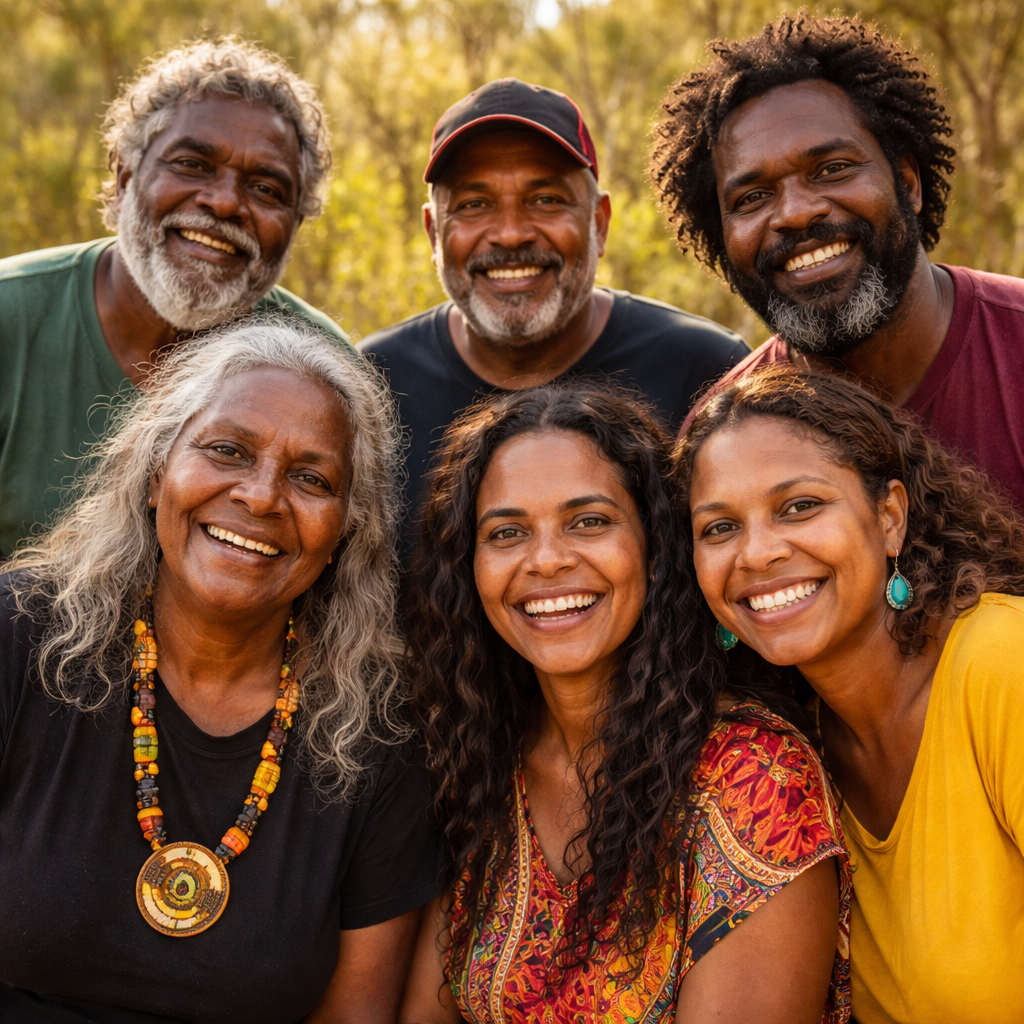
Indigenous Australians are widely recognised by archaeologists and historians as the oldest continuous culture on Earth. For tens of thousands of years, Aboriginal and Torres Strait Islander peoples have maintained languages, traditions, and spiritual connections to land that stretch back to the earliest chapters of human history.
Modern research increasingly confirms that the cultural heritage of Indigenous Australians is not only ancient but remarkably resilient. Despite dramatic environmental changes and the disruptions of colonisation, many traditions and knowledge systems continue to be practiced today.
A Culture Dating Back More Than 60,000 Years
Scientific evidence suggests that Indigenous Australians first arrived on the continent at least 60,000 years ago, making them among the earliest modern humans to leave Africa and settle new lands.
Archaeological sites across Australia support this timeline. Ancient artefacts, stone tools and cultural remains found in places such as the Northern Territory and Western Australia demonstrate continuous human presence dating back tens of thousands of years.
These findings place Indigenous Australians far earlier than most other known continuous cultures on Earth. Many ancient civilisations, including those of Egypt, Greece and Rome, developed only within the last few thousand years.
By contrast, Indigenous Australians maintained cultural continuity across an enormous span of time.
Hundreds of Nations and Languages
Before European settlement in 1788, Australia was home to a rich mosaic of Indigenous societies.
Historians estimate there were over 250 distinct language groups and hundreds of nations spread across the continent. Each had its own traditions, governance systems, spiritual beliefs and cultural practices.
These nations maintained extensive trade routes across Australia. Goods such as stone tools, shells, ochre and ceremonial items travelled thousands of kilometres through established networks long before European contact.
This diversity meant that Indigenous Australia was not a single culture but a vast network of interconnected societies, each adapted to its local environment.
Knowledge Systems Built Over Millennia
One reason Indigenous culture endured for so long was its deep understanding of the land.
Over tens of thousands of years, Indigenous communities developed sophisticated environmental knowledge that allowed them to thrive in some of the harshest landscapes on Earth.
Practices such as cultural burning helped manage vegetation and reduce the intensity of bushfires. Seasonal movement ensured food sources remained sustainable. Detailed knowledge of plants, animals and water systems supported survival in diverse climates from tropical forests to desert regions.
Many scientists now recognise that this ecological knowledge reflects one of the world’s oldest and most advanced environmental management systems.
The Importance of the Dreaming
Central to Indigenous cultural identity is the concept often described as the Dreaming or Dreamtime.
The Dreaming refers to the spiritual framework that explains how the world was created and how people should live within it. These stories are passed down through generations in songlines, art, dance and oral storytelling.
Songlines in particular act as cultural maps, guiding people across vast landscapes while preserving knowledge about geography, history and law.
Because these traditions are transmitted orally, they have been preserved across thousands of generations without written records.
Cultural Continuity Despite Colonisation
The arrival of British settlers in 1788 dramatically disrupted Indigenous societies. Disease, displacement and conflict caused immense population loss and cultural upheaval.
Yet despite these challenges, Indigenous culture has survived and continues to evolve.
Many Indigenous languages are being revitalised, traditional land management practices are increasingly recognised by scientists, and Indigenous art and storytelling have become globally celebrated forms of cultural expression.
Today Aboriginal and Torres Strait Islander peoples continue to maintain strong cultural identities and connections to Country.
Recognition of a Unique Cultural Heritage
Around the world, scholars increasingly acknowledge Indigenous Australians as custodians of the longest continuous cultural tradition known to humanity.
This recognition highlights not only the age of Indigenous culture but also its remarkable resilience.
For more than 60,000 years, Indigenous Australians have passed down knowledge, traditions and stories that connect the present to one of the deepest cultural histories on the planet.
Their heritage offers a unique window into humanity’s earliest journeys and enduring relationship with the natural world.
Discover more from The Oceanic Press
Subscribe to get the latest posts sent to your email.