
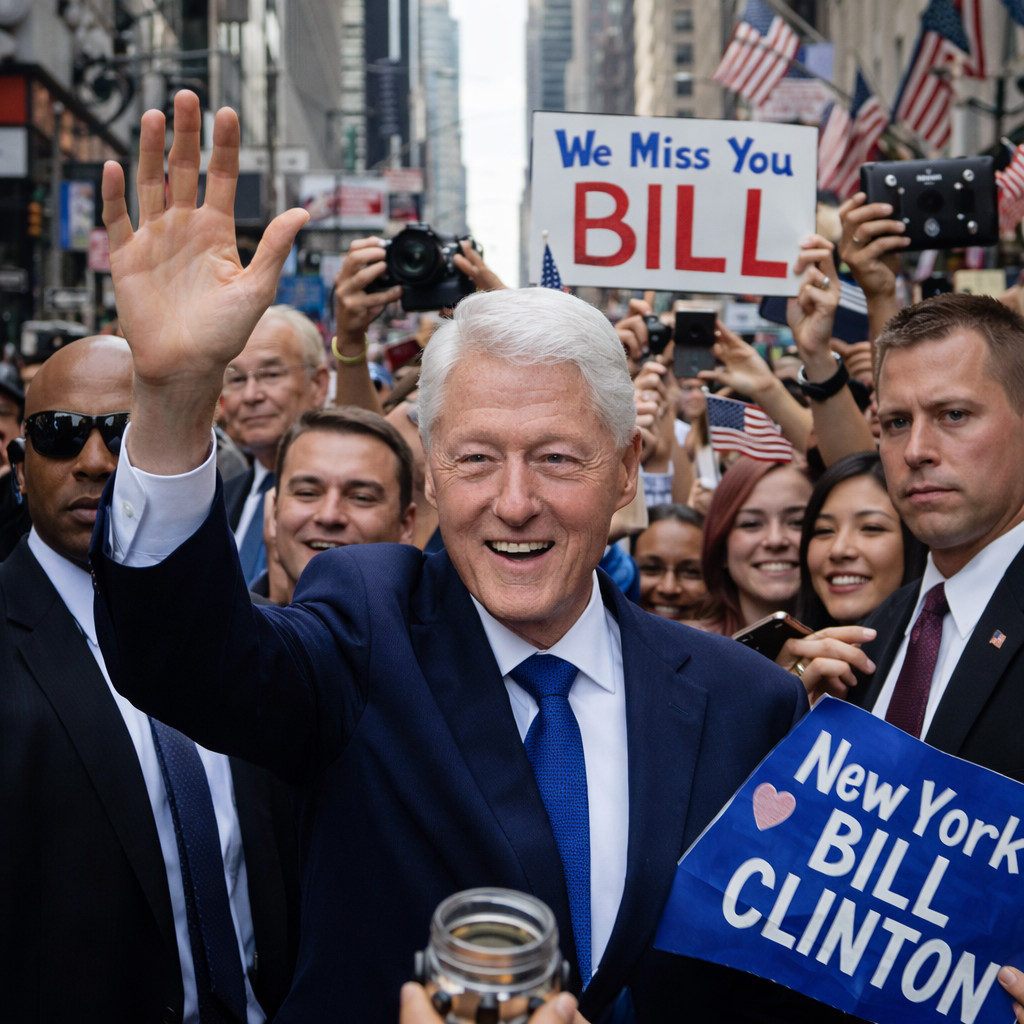
Economic Boom, Impeachment Drama and a Complicated Legacy
When Bill Clinton took office in January 1993, he represented a generational shift in American politics. Young, charismatic and politically agile, he campaigned as a “New Democrat” who promised to modernise the Democratic Party and reposition it toward the political centre.
His eight years in office delivered strong economic growth and major policy changes, but they were also marked by high-profile scandals and impeachment proceedings that continue to shape debates about his legacy.
This is a breakdown of what he achieved, what went wrong, and the controversies that defined his presidency.
The Economic Boom Years
Clinton presided over one of the strongest economic periods in modern US history.
During the 1990s:
- The United States experienced sustained GDP growth
- Unemployment fell to historically low levels
- Inflation remained relatively stable
- The federal government recorded budget surpluses in the late 1990s
His administration raised taxes on higher earners in 1993 and restrained some spending, moves that contributed to deficit reduction. Combined with the tech boom and strong private sector expansion, the US economy surged.
Supporters credit Clinton’s fiscal management and pro-growth policies for helping create the conditions for this expansion. Critics argue that broader global economic forces and the rise of the internet economy played a larger role.
Welfare Reform and Crime Policy
Two of Clinton’s most consequential domestic policies were welfare reform and crime legislation.
Welfare Reform
In 1996, Clinton signed the Personal Responsibility and Work Opportunity Reconciliation Act. It fundamentally reshaped the US welfare system, replacing federal entitlement programs with time-limited assistance tied to work requirements.
Supporters say it reduced welfare dependency and increased workforce participation. Critics argue it increased hardship for vulnerable families and weakened the social safety net.
Crime Bill
The 1994 crime bill expanded funding for police and prisons and introduced tougher sentencing laws. At the time, it had bipartisan support amid rising crime rates.
In later years, the legislation has been criticised for contributing to mass incarceration, particularly affecting Black communities. Clinton himself later acknowledged that aspects of the bill had unintended consequences.
NAFTA and Globalisation
Clinton strongly supported free trade. He signed the North American Free Trade Agreement, known as NAFTA, which created a free trade zone between the United States, Canada and Mexico.
Supporters argue NAFTA increased trade and modernised North American economic ties. Critics claim it accelerated manufacturing job losses in parts of the US and deepened economic inequality in certain regions.
His presidency embraced globalisation at a time when the US economy was rapidly integrating into international markets.
Foreign Policy and Military Actions
Clinton’s foreign policy record included both diplomatic efforts and military interventions.
- NATO expanded into Eastern Europe
- The US intervened in the Balkans during the Kosovo conflict
- Missile strikes were launched against targets in Sudan and Afghanistan
His administration also faced ongoing tensions in Iraq and attempted, unsuccessfully, to broker peace agreements in the Middle East.
While Clinton avoided large-scale ground wars, critics argue that some interventions had mixed long-term outcomes.
The Monica Lewinsky Scandal and Impeachment
The defining controversy of Clinton’s presidency was his relationship with White House intern Monica Lewinsky.
In 1998, Clinton denied having a sexual relationship, famously stating, “I did not have sexual relations with that woman.” Later evidence proved the relationship had occurred.
He was accused of lying under oath during a civil lawsuit deposition, leading the House of Representatives to impeach him on charges of perjury and obstruction of justice.
The Senate ultimately acquitted him, allowing him to remain in office.
The scandal dominated national politics for over a year and deeply divided public opinion. While Clinton left office with strong approval ratings, the impeachment proceedings significantly damaged his personal reputation.
Other Controversies
Clinton’s presidency was surrounded by additional investigations and political battles, including:
- The Whitewater real estate investigation
- Allegations of campaign finance irregularities
- Accusations of misconduct from multiple women
Some investigations resulted in no criminal charges, but they contributed to a perception of ongoing controversy throughout his time in office.
The End of His Presidency
Clinton left office in January 2001 with high approval ratings, largely driven by economic strength.
However, debates over welfare reform, crime policy, trade agreements and personal conduct have continued to shape assessments of his presidency.
His legacy remains complex:
- Economically successful
- Politically divisive
- Personally scandal-marked
For some, he represents pragmatic centrism and economic prosperity. For others, he embodies political compromise that carried significant social costs.
Final Assessment
Bill Clinton’s presidency cannot be easily summarised as purely successful or purely scandalous.
He oversaw a period of remarkable economic growth and enacted policies that reshaped American governance. At the same time, his administration faced ethical controversies and decisions that remain hotly debated decades later.
His time in office stands as one of the most consequential and controversial chapters in modern American political history.
Discover more from The Oceanic Press
Subscribe to get the latest posts sent to your email.