
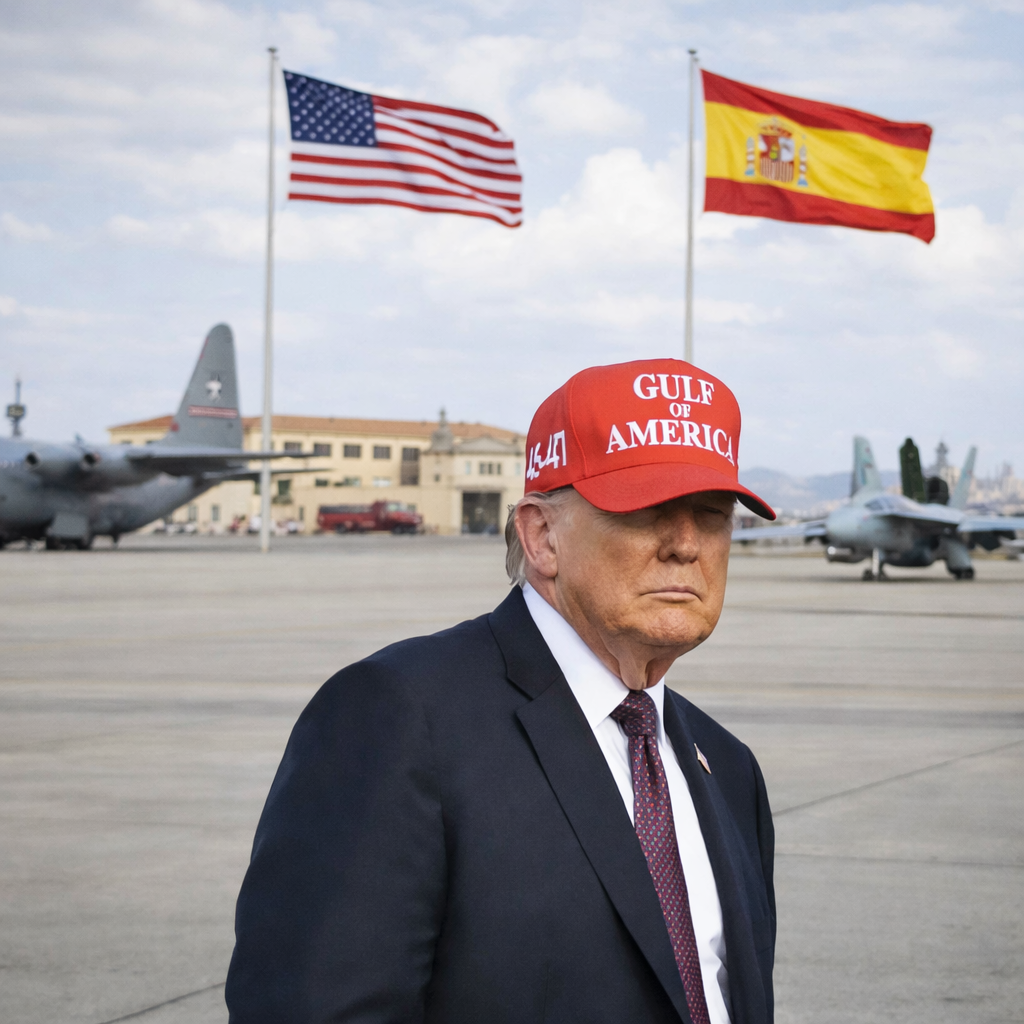
Spain has refused permission for the United States to use jointly operated military bases on Spanish territory for strikes related to the escalating conflict involving Iran. The decision marks a significant political signal from Madrid as the war continues to widen and international pressure grows over the legality and consequences of the military campaign.
The bases at Rota and Morón, located in southern Spain, are strategically important installations that support American and NATO operations in Europe, Africa and the Middle East. Both facilities regularly host US aircraft and naval assets and play a major role in logistics, refuelling operations and troop movements.
Spain’s government has made clear the facilities cannot be used for offensive military action against Iran. Officials say the bilateral defence agreement governing the bases requires that operations comply with international law and established legal frameworks.
The move comes as Spain intensifies criticism of the military campaign launched by the United States and Israel against Iran. Spanish leaders have warned the operation risks increasing instability across the Middle East and could worsen an already volatile global security environment.
Spain’s refusal has practical implications for military operations in the region. Rota and Morón serve as key staging points for aircraft operating between North America, Europe and the Middle East. Restricting their use could complicate logistics for US forces conducting long range operations.
Flight tracking data has shown multiple US aircraft departing the bases since the conflict began, with several reportedly relocating to other military installations in Europe, including Ramstein Air Base in Germany. The movements suggest the United States may be repositioning aircraft and equipment to maintain operational flexibility while avoiding restrictions placed on Spanish bases.
The conflict itself has triggered a range of reactions across Europe. Some governments have expressed concern about the legality of the strikes and the potential for the war to expand across the region. Others have taken a more cautious stance, balancing diplomatic concerns with security relationships with the United States.
European leaders are particularly worried about the wider consequences of a prolonged conflict involving Iran. The country sits at the centre of the Persian Gulf energy corridor and holds significant influence over the Strait of Hormuz, one of the world’s most important oil and gas shipping routes. Any disruption to traffic through the strait could affect global energy markets and supply chains.
Energy analysts warn that instability in the region has already pushed up oil prices and increased shipping costs for tankers operating in the Gulf. If the conflict escalates further or spreads to additional countries, global markets could face significant volatility in energy supplies.
The diplomatic divide emerging within Europe highlights the broader geopolitical challenges created by the conflict. Some governments are advocating for a political and diplomatic solution, while others remain focused on deterrence and regional security.
Spain’s stance reflects growing concern in parts of Europe about being drawn directly into military operations. By restricting the use of its bases, Madrid is attempting to distance itself from the strikes while still maintaining its commitments to NATO and defence cooperation with the United States.
The situation remains fluid as governments across Europe monitor developments in the Middle East and consider the potential military, economic and diplomatic consequences of the conflict.
Discover more from The Oceanic Press
Subscribe to get the latest posts sent to your email.