
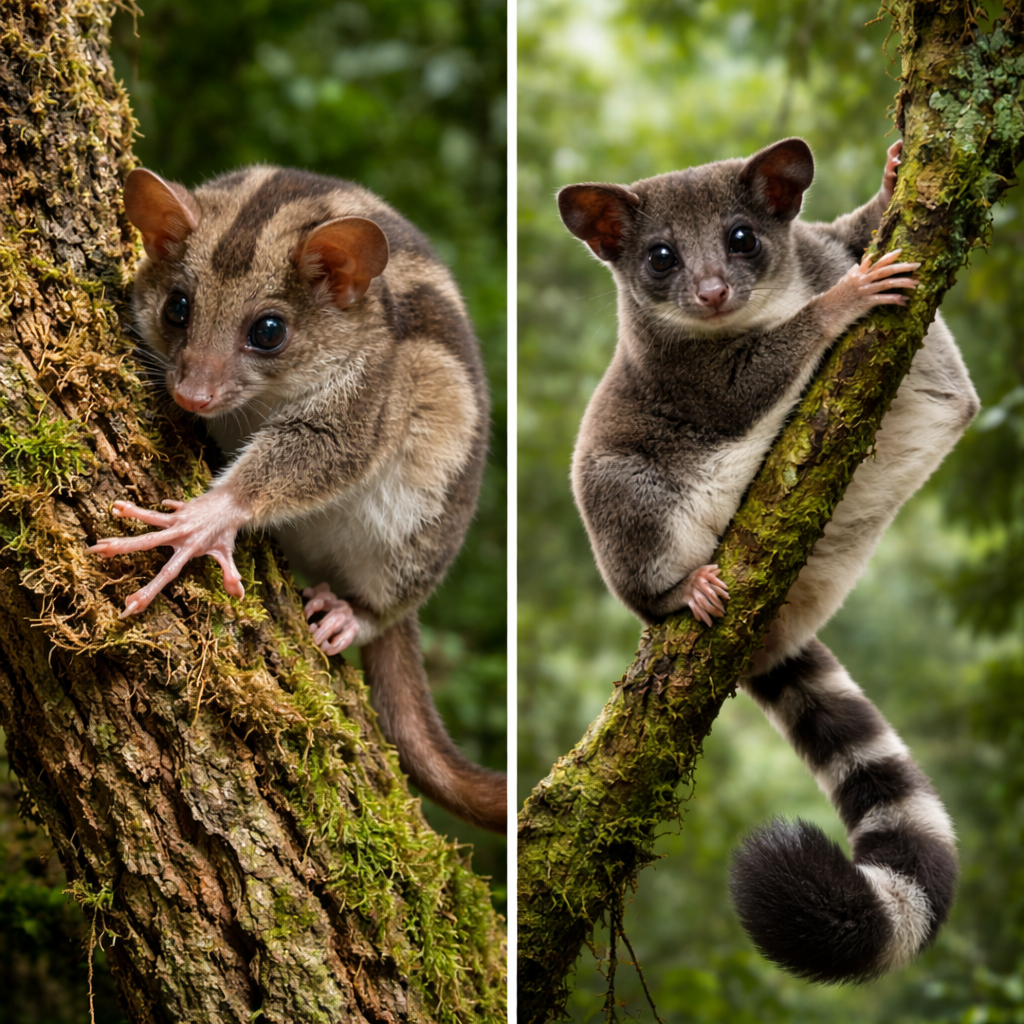
Researchers have rediscovered two small mammals that were believed to have vanished thousands of years ago, in what scientists are describing as a rare and extraordinary wildlife discovery.
The animals, a tiny possum with unusually long fingers and a gliding marsupial that uses its tail to grip tree branches, were found living deep within remote rainforest in the Indonesian region of West Papua.
Both species were previously thought to have disappeared roughly 6,000 years ago.
Finding a species that has been presumed extinct for thousands of years is extremely uncommon. Discovering two in the same region is even more remarkable and has drawn significant interest from the scientific community.
One of the animals is a small striped marsupial known as the pygmy long-fingered possum. The creature weighs around 200 grams and has a distinctive feature that sets it apart from other possums. On each hand, its fourth finger is dramatically longer than the others.
Scientists believe this elongated finger is used to extract insect larvae hidden inside tree bark and wood. These larvae form the possum’s primary food source.
The species is believed to have disappeared from Australia during the Ice Age, with fossil evidence suggesting it once lived there before vanishing from the continent.
The second rediscovered animal is a ring-tailed glider. Like some Australian gliding mammals, it lives high in the forest canopy and shelters inside hollows in tall trees. Its tail is capable of gripping branches, helping it move and balance while navigating the treetops.
Researchers were able to identify the species after carefully piecing together evidence collected over many years. The process involved examining old fossil records, studying rare photographs and analysing preserved specimens.
These clues eventually led scientists to conduct field expeditions in remote areas of New Guinea, where the animals were finally observed.
Local Indigenous communities played a key role in the discovery. Researchers worked closely with elders from nearby clans who shared knowledge about wildlife living in the forests.
According to scientists involved in the study, identifying the species would likely not have been possible without the information provided by local communities.
In some areas the glider is considered culturally significant. Local people treat the animal with great respect and traditionally avoid hunting it.
Despite the rediscovery, researchers warn that the animals’ habitat faces increasing threats. Logging operations in parts of the region are placing pressure on the forests where the species survive.
Scientists and conservation groups are now working with local communities to strengthen protection of these forests and secure Indigenous land rights that could help safeguard the area.
Protecting the habitat is considered crucial to ensuring the newly rediscovered species continue to survive in the wild.
Discover more from The Oceanic Press
Subscribe to get the latest posts sent to your email.