
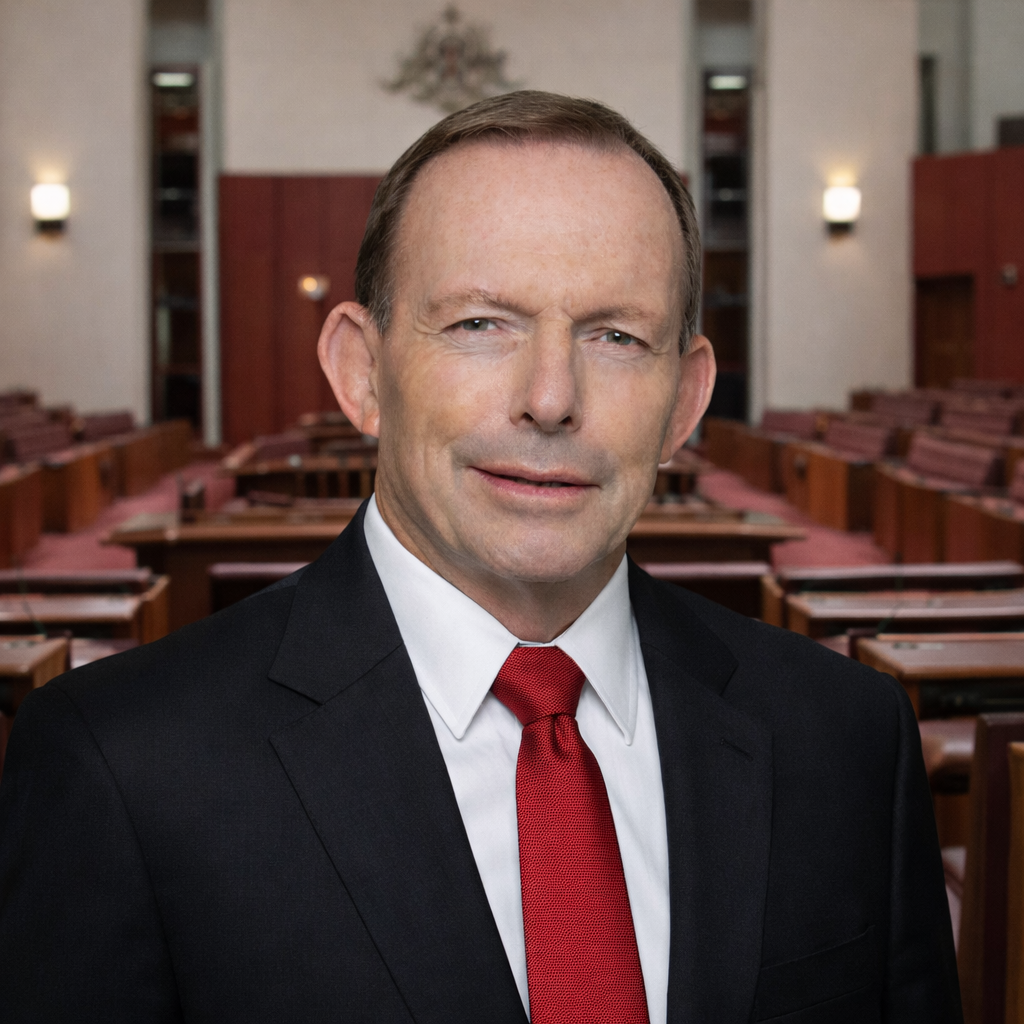
Former Australian prime minister Tony Abbott has criticised the Albanese government’s approach to national security and foreign policy, arguing that an excessive focus on political management is weakening Australia’s global standing and strategic credibility.
In a commentary published this week, Abbott said Australia’s absence from recent military action against Iran highlights a broader decline in the country’s international influence and commitment to its traditional alliances.
According to Abbott, Australia has historically stood alongside the United States in major conflicts, making its current position particularly notable.
“From an Australian perspective, the most significant thing about the US attack on Iran is that we have not been involved in the slightest,” he wrote.
Stay sharp with The Oceanic Press Brief — your quick, no-fluff snapshot of what’s happening across Australia, New Zealand, and the Pacific. Sign up now to stay informed.
Abbott pointed to a long history of cooperation between Australia and the United States, noting that Australia has supported the US in every major conflict since American troops first entered combat in World War I at the Battle of Le Hamel under Australian General John Monash.
He cited Australia’s participation in the Korean War, the Vietnam War, both Gulf Wars and the conflict in Afghanistan as examples of the country’s longstanding role as a reliable US ally.
Abbott also highlighted Australia’s contributions to the fight against Islamic State in Iraq and Syria. Australian forces helped airdrop supplies to Yazidi civilians trapped on Mount Sinjar, assisted Kurdish forces in northern Iraq, and supported coalition efforts to retake Mosul. The Australian Defence Force also trained Iraqi troops and conducted air strikes across the region.
More recently, Australia has contributed to Western support for Ukraine following Russia’s invasion.
However, Abbott argued that the Albanese government’s response to the current conflict involving Iran demonstrates a reluctance to play a meaningful strategic role.
He criticised the government’s initial response to the joint US and Israeli strike on Iran, particularly Foreign Minister Penny Wong’s call for “de-escalation”.
Abbott suggested that weakening Iran’s ability to develop nuclear weapons and support militant groups should be seen as beneficial for global security.
Prime Minister Anthony Albanese later stated that Australia supported efforts to prevent Iran from acquiring nuclear weapons but confirmed that Australia had not been notified in advance of the strike and had not been asked to provide assistance.
Abbott said this reflected Australia’s diminishing influence.
“That we were neither asked for help nor advised of what was coming speaks volumes for Australia’s shrinking stature in the wider world,” he wrote.
The former prime minister also pointed to what he described as the government’s reluctance to deploy military assets overseas. He noted that in December 2023 Australia declined a US request to send a naval frigate to help secure shipping routes in the Red Sea, marking the first time since the ANZUS alliance was established in 1951 that Australia refused such a request.
Abbott said several Australian warships were stationed at Sydney’s Garden Island naval base at the time and could potentially have been deployed.
He argued the government may have been concerned about domestic political backlash, particularly from groups sympathetic to Iran’s Houthi allies in Yemen.
Abbott also criticised what he described as the government’s emphasis on long-term defence spending announcements rather than immediate improvements to military capability.
He warned that Australia currently lacks sufficient missile defence systems and modern drone capabilities, despite the growing importance of these technologies in contemporary warfare, as demonstrated by the war in Ukraine.
“Everything is about political management rather than real national security,” he wrote.
Abbott suggested this approach could leave Australia unprepared if tensions escalate in the Indo-Pacific, particularly if the United States seeks support in the event of a Chinese military move against Taiwan.
He argued the government appears to be positioning itself to delay meaningful military commitments until new capabilities such as AUKUS submarines become available in the 2030s.
According to Abbott, such an approach risks weakening Australia’s alliances and strategic independence.
He also criticised the growing emphasis on what some leaders describe as “middle power diplomacy,” saying the concept can be used as a way to avoid confronting security threats directly.
Abbott concluded by warning that the international “rules-based order” ultimately depends on military strength and credible alliances.
While acknowledging political controversies surrounding former US president Donald Trump, Abbott argued that decisive action against Iran’s nuclear ambitions could strengthen global security.
“The current attempt to destroy forever the Iranian theocracy’s nuclear cravings will make the world safer, fairer and better,” he wrote.
“But the humiliating reality is that Australia is doing nothing practical to bring it about.”
Discover more from The Oceanic Press
Subscribe to get the latest posts sent to your email.