
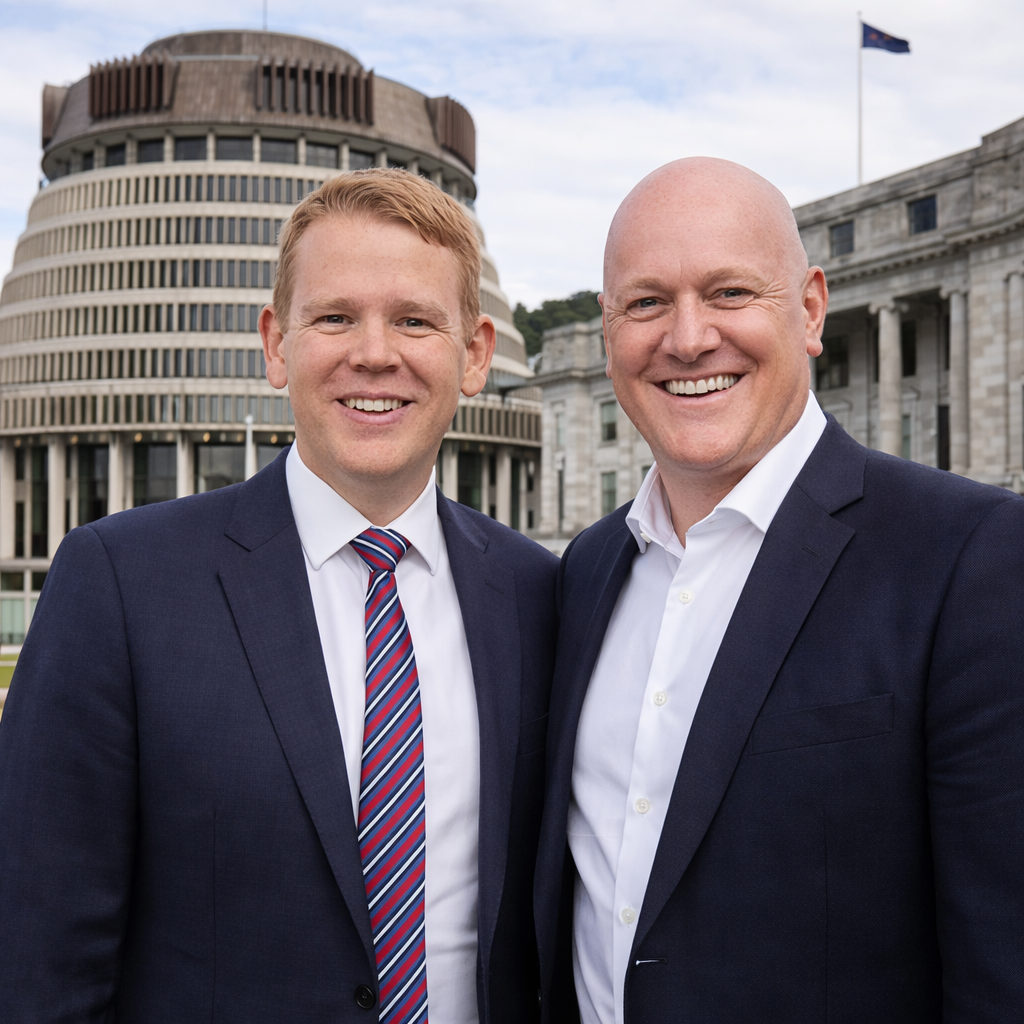
Policy Showdown: Who Stands For What — And Who It Benefits
As New Zealand heads into the 2026 general election, the two major parties — the centre-right New Zealand National Party and the centre-left New Zealand Labour Party — are offering competing visions for the country’s future. This article breaks down key policy differences neutrally and compares who each set of policies is likely to benefit.
Economic Strategy and the Cost of Living
National’s Approach
National’s economic pitch focuses on tax relief, controlled spending and fiscal discipline. Their fiscal plan promises to deliver lower taxes, reduce debt and build large fiscal buffers while still funding frontline services and infrastructure. It projects a return to surplus and lower debt compared with Labour’s forecasts, with independent advisors backing its credibility.
Labour’s Approach
Labour emphasises supporting jobs, health and housing while ensuring that infrastructure and public services remain strong. Their strategy involves active government involvement in job creation, public spending on services and investment in sectors like media with measures such as a proposed streaming levy to fund local productions.
Who It Benefits
- National’s policies may appeal more to business owners, investors and taxpayers who prefer lower taxes and fiscal restraint.
- Labour’s focus on services and job support is likely to resonate with workers, unions and households facing cost-of-living pressures.
Taxation and Revenue
National
National’s fiscal policies emphasise reducing tax burdens and reining in government spending as a way to spur economic growth. This is designed to leave more money in the pockets of households and businesses.
Labour
Labour has proposed a narrow capital gains tax on property transactions excluding family homes and farms, alongside other targeted levies (such as the streaming levy), but has ruled out broader wealth taxes.
Who It Benefits
- Tax cuts under National are likely to benefit higher earners and property investors most where marginal tax relief matters.
- Labour’s narrower tax measures aim to fund public services and redistribute wealth moderately, benefiting lower and middle-income earners.
Healthcare and Social Services
National
National proposes to maintain investment in healthcare and education but through a lens of efficiency and controlled spending as part of their broader fiscal discipline plan.
Labour
Labour explicitly prioritises strengthening public health services, including proposals like free cervical cancer screening for women aged 25–69 and support for general practice through low-interest loans.
Who It Benefits
- Labour’s policies support public healthcare access, especially for women and underserved communities.
- National’s approach may benefit taxpayers concerned about rising public spending, without dramatically shifting service levels.
Infrastructure and Regulation
National
The current National-led government has passed legislation such as the Fast-track Approvals Act 2024 to expedite infrastructure and development project consents, reflecting a pro-growth, pro-business regulatory stance.
Labour
Labour has said it would repeal the Regulatory Standards Act 2025 early if elected, indicating a focus on reviewing regulatory frameworks rather than maintaining new fast-track processes.
Who It Benefits
- National’s regulation reforms are seen as beneficial to developers, businesses and industries seeking faster project approval.
- Labour’s regulatory review may benefit communities concerned about oversight, environmental safeguards, and fairness in consent decisions.
Culture, Media and Creative Industries
Labour
Labour has proposed a streaming levy on foreign streaming platforms to fund local content production, aiming to boost the NZ creative sector and preserve local culture.
National
National has not focused heavily on media levies in its central platform but emphasises general economic growth and maintaining a competitive creative sector through broader fiscal policy.
Who It Benefits
- Labour’s levy proposal aims to help local artists, producers and the media sector.
- National’s broader economic focus indirectly benefits businesses across sectors, including creative industries that thrive on a strong economy.
Treaty, Social Policy and Values
Labour
Labour formally recognises the Treaty of Waitangi as the founding document of New Zealand, and embed this principle across policies aimed at equitable outcomes and social justice. Their broader policy values reflect this constitutional and social commitment.
National
National’s policies do not typically prioritise a redefinition of treaty principles but instead focus on governance, fiscal issues and broader regulatory matters. They emphasise stability and economic fundamentals rather than constitutional reinterpretation.
Who It Benefits
- Labour’s treaty emphasis appeals to voters prioritising bicultural partnership and equity in public policy.
- National’s approach appeals to those prioritising economic stability over constitutional change.
Summary: National vs Labour in 2026
| Policy Area | National | Labour |
|---|---|---|
| Economy & Budget | Fiscal discipline, lower taxes | Investment, services and employment support |
| Taxation | Broad tax relief | Targeted taxes and levies |
| Healthcare | Stable funding, efficiency | Expanded access and supports |
| Infrastructure & Regulation | Pro-growth approvals | Regulatory review and oversight |
| Culture & Media | Economy-wide support | Streaming levy for local content |
| Social Policy & Treaty | Economic focus | Explicit Treaty and equity emphasis |
National’s policies tend to benefit taxpayers and business confidence, with a strong emphasis on economic recovery, fiscal stability and reduced regulatory burden. Labour’s platform places a greater focus on public services, targeted taxes and social outcomes, appealing to voters prioritising investment in health, culture and equity.
As New Zealanders prepare to vote later in 2026, these distinctions are shaping how the electorate perceives which party best addresses personal and national priorities in a time of economic and social challenge.
Discover more from The Oceanic Press
Subscribe to get the latest posts sent to your email.